
Labour’s Bus Replacement Leader
Why a 403-MP party still looks short of statesmen

Labour has more MPs than any British party has had since the parliament of 2001. It has a majority big enough to lose by-elections, suspend rebels, endure scandals, offend its base, bore the country and still carry on governing. Somewhere in those 403 people, there should be five or six obvious future prime ministers, and at least one figure who makes donors, journalists and civil servants think: yes, fine, that one could run the thing.
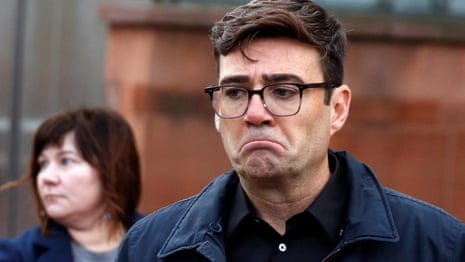
Instead, the conversation keeps drifting back to Andy Burnham.
This is strange enough on its own. Burnham was an MP for sixteen years. He sat in Cabinet. He ran for the Labour leadership in 2010 and came fourth. He ran again in 2015 and lost to Jeremy Corbyn by 40 points. Since then he has been Mayor of Greater Manchester, where his reputation has somehow inflated from regional executive to lost statesman of the Labour movement.
His great proof of administrative genius is buses.
To be fair, Greater Manchester’s bus reform is not nothing. Local control over routes, fares and franchising is useful, and Burnham deserves some credit for making it politically salient. But useful local government should not be confused with national leadership. Britain is a nuclear-armed G7 state with a stagnant economy, a swollen welfare bill, low productivity, low trust, and a planning system designed by people who hate civilisation. Running the country requires rather more than taking the Bee Network to Bury.
There is nothing inherently wrong with reaching outside Parliament in a crisis. Other countries have done it with genuine external heavyweights. Canada reached for Mark Carney, a former governor of both the Bank of Canada and the Bank of England. Italy reached for Mario Draghi, a former president of the European Central Bank.
Labour’s external heavyweight is Andy Burnham: a former cabinet minister, twice-leadership loser and mayoral bus man.
In a healthier party, Burnham would be one option among many. His record in Cabinet would be weighed. His achievements in Greater Manchester would be assessed in proportion.
Burnham’s rise to become the sole plausible leader is an indictment of everyone else. This achievement is only because the field has become obviously thin. A party only reaches for its bus replacement leader when the normal route has failed.
Heavy is the head that wears the crown
Coronations have a nasty habit of looking clever until voters get involved.
Parties like them because they feel disciplined. No messy contest, no internal argument, no awkward questions about the candidate’s record, judgement or weaknesses. Everyone smiles, the factions pretend to be united, and the press is told that the serious people have behaved seriously.
Then the public gets a vote.
Gordon Brown became Labour leader without a real contest and lost in 2010. Rishi Sunak became Conservative leader without a real contest and lost in 2024. Kamala Harris inherited the Democratic nomination without a normal competitive primary and lost later that year. Rather than eliminating weakness, coronations merely postpone its discovery.
The Burnham conversation already has the faint smell of inevitability about it. If he is the answer, he should have to survive an argument. The fact that parts of Labour seem to want the conclusion without the contest is not a sign of confidence. It is another sign that the bench is thin.
It seems that the Labour Party lack the ability to look forward 12 months, and see the almost certainty that Burnham will be in the same position in the country and in the polls as Starmer was a month ago. Once again, everyone will be regretting that they didn’t truly test Burnham’s vision for the country when they had a chance.
The Substitute Bench
The obvious defence of Burnham is that the alternatives are worse. Unfortunately for Labour, this is also the prosecution’s case.
Take Wes Streeting. His pre-MP career ran through student politics, charities, public-sector consulting and local government. This is a very modern Labour CV: polished, political, media-ready, fluent in the language of reform, but utterly devoid of any evidence of executive command, or understanding of economic growth.
Angela Rayner perhaps has a more grounded claim. Care work is real work: hard, human, underpaid and socially necessary. It gives her a connection to ordinary public services that many politicians lack. But it fails almost every test relevant to national leadership. It does not show that she has run a large institution, managed a serious budget, made strategic trade-offs, delivered complex reform, or been accountable for outcomes at scale. Her UNISON experience is even weaker as proof of statecraft. Trade union politics may teach grievance-handling and internal faction management, but as preparation for running the country it is thin gruel.
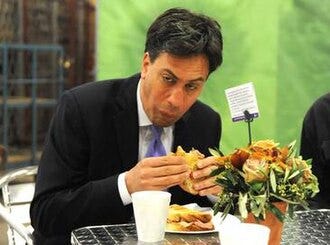
Then there is Ed Miliband, which is where the panic becomes visible. Miliband has already led Labour into a general election and lost. He is policy-literate and experienced, but he is not an answer to the leadership problem. That a man who already failed the national test can return a decade later as a plausible leader or chancellor is a further damning indictment of Labour’s woes.
Shabana Mahmood is the most revealing case because she should be one of Labour’s strongest options. She has a proper professional background as a barrister, holds a major office of state, and is pursuing immigration reduction in a country where the public plainly wants lower immigration. In a rational party, that combination would make her formidable. In Labour, it makes her suspect. The party has somehow found a senior figure with professional ballast, executive office and a position closer to public opinion than activist opinion, and turned that into a liability because she is seen as too right wing.
Al Carns is the strongest version of the external-CV argument. He has the kind of serious non-political experience Labour otherwise lacks: a decorated military career, command experience, and time advising Defence Secretaries. He cannot be dismissed as another creature of the politics-adjacent pipeline. But his case also shows the limit of raw material. Once inside government, even impressive people can be processed into the same machine. If the military CV candidate cannot visibly force a serious armed-forces settlement, outside experience is necessary but insufficient. The machine can digest almost anything.
Rubbish in, rubbish out
The thinness of Labour’s leadership field is fundamentally a problem of recruitment.
According to a Sunday Times analysis, at least 224 of the 257 new Labour MPs elected in July 2024 came from charities, communications or lobbying agencies, or had previously been political employees, ie just shy of 90%.
This is the statistic that explains the Burnham boomlet. A party whose new MPs come so heavily from charities, lobbying, comms and political employment should not be surprised when its leadership field looks like politics talking to itself. Those worlds can produce campaigners, message-carriers, factional operators and fluent performers. But apparently, they cannot produce a leader.
That is the missing quality. Too many Labour MPs have worked in institutions orbiting politics: organisations whose incentives are access, advocacy, pressure, narrative, patronage and internal positioning. It does not usually prove that someone can run a large organisation, or has built a business, managed complex operations, commanded a bureaucracy, taken responsibility for failure, or been held accountable by markets, courts, patients, customers or hostile reality.
It also helps explain Labour’s strange detachment from growth. A party drawn so heavily from the politics-adjacent world will naturally talk more fluently about redistribution, rights, services, access and fairness, than about building, selling, hiring, investing and expanding.
The Lost Ballast
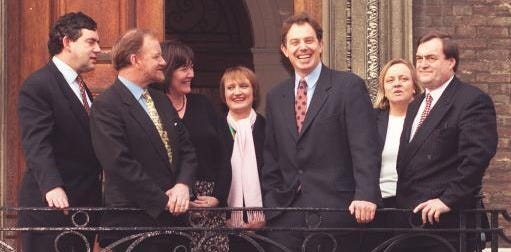
Old (ie New) Labour was full of the usual political mix: mediocrities, cowards, obsessives, time-servers, capable ministers and the occasional serious figure. The difference is that many of them had ballast.
Jack Straw and Blair were barristers. Margaret Beckett worked in metallurgy. Tessa Jowell was a psychiatric social worker. Alan Johnson was a postman. Alistair Darling and Douglas Alexander were solicitors. David Blunkett and Gordon Brown were lecturers. Stephen Timms spent 15 years in telecoms.
These were ordinary careers as much as grand ones. That is part of the point. They gave politicians identities formed outside Westminster. They had worked in courts, universities, hospitals, councils, unions, companies and public services before becoming creatures of the whips’ office. They had been shaped by institutions with purposes beyond briefing journalists, lobbying ministers, managing the news cycle or climbing the party ladder.
These experiences do not automatically make someone a statesman. They do give them some formation before politics gets to them.
Plenty of modern MPs are bright, polished and industrious. The missing quality is depth of formation. Older politicians more often arrived in Parliament with a life already partly built elsewhere. Modern politicians too often arrive fluent in politics before they have acquired much obvious authority outside it.
Take a look in the mirror
The Conservatives had the same broader recruitment pool. Around 2005, their front bench included people with serious professional and commercial backgrounds. David Davis spent 15-plus years at Tate & Lyle. Theresa May worked at the Bank of England and in financial services. Michael Howard and Dominic Grieve were barristers. David Lidington worked for BP and Rio Tinto-Zinc. Liam Fox was a GP.
The old Conservative Party had plenty of mediocrities, bores and credentialled disappointments. Credentials can be wasted. Still, the raw material was different. These figures had worked in companies, banks, courts, surgeries and industry before Westminster fully digested them.
The modern Tory comparison cuts two ways. On paper, today’s Conservatives retain more private-sector ballast than Labour. Kemi Badenoch worked in software, banking and digital media. Mel Stride founded and ran a business for around 20 years. Robert Jenrick (not a Tory now, I know!) was a corporate lawyer and worked at Christie’s. Claire Coutinho worked at Merrill Lynch, helped start a business, worked at KPMG, and then moved through the think-tank and special-adviser route.
That is a stronger set of commercial CVs than Labour can offer near the top of its leadership conversation. Yet after the 2024 disaster, the Tory field still looked thin. More private-sector experience helped, and the party still failed to produce a golden generation waiting to govern.
Labour remains the cleanest case because it has the numbers and still looks short of leaders. The wider British political class has the same disease in milder form: narrower recruitment, thinner formation, more professional politics, less obvious authority.
The Machine Selects for Obedience
The cause is fairly simple. Parties reward the qualities party machines want, then act surprised when those qualities fail to add up to leadership.
Candidate selection has become risk management. Headquarters wants candidates who are loyal, polished, ideologically legible, unlikely to embarrass the party, willing to repeat the line, and safe enough to survive the campaign. Still, the safest candidate for the machine is often the least interesting candidate for the country.
The Institute for Government makes the basic point: MPs become the pool from which ministers, cabinet members and prime ministers are drawn. A serious party would therefore treat selection as an exercise in national capacity. Instead, too often it becomes an exercise in internal control. Find the people who will behave. Filter out the people who might cause trouble. Reward the people who understand the machine.
Labour’s 2024 selections produced reports of top-down choices, compressed timetables and local members being left with little say were more than procedural grumbles. They showed candidate selection becoming a bottleneck controlled by headquarters. The people who passed through were the people most acceptable to the machine.
Dominic Cummings argued years ago that Parliament needed people very different from the usual political class: people with quantitative ability, problem-solving skills and experience managing complex organisations. That is exactly the missing group. Westminster has plenty of people who can talk about systems. It has far fewer who have run difficult systems before asking for power over the state.
Simon Hart’s account from the Conservative side points the same way. Candidate identification, selection, training and discipline shape the quality of government. A bad recruitment system produces bad MPs, weak ministers and thin leadership contests. By the time a party is choosing a leader, the damage was done years earlier: in the approved list, the selection meeting, the parachuted candidacy and the safe seat.
That is why the Burnham problem goes beyond Burnham. The route into Parliament produces the alternatives. A machine that selects for obedience produces obedient people, not leaders.

Conclusion
Burnham is the symptom, not the disease.
Labour has 403 MPs, a huge majority, a crowded front bench, and a new intake large enough to reshape the party for a generation. Yet the leadership conversation still circles back to a man the party has already rejected twice.
That should embarrass Labour more than Burnham. He is doing what ambitious politicians do. The stranger fact is that the party has made his pitch plausible.
A serious governing party should have several people who look ready to take command. Labour has few people who have shown authority at scale, independently of the political machine, while being accountable for real-world outcomes.
Until our political parties, their whips, and their MP selections move away from demanding low-risk candidates with little real world experience, we are doomed to repeat our ten-year-and-counting conveyor belt of short-term, weak PMs.
Rory Stewart became a MP because Cameron tried open primaries. Unfortunately he stopped the experiment and they went back to the usual pet people approved by Cchq
Some advice: you are too verbose for the size of your readership. Brevity reduces the opportunity cost.
I don't think this is a problem of people, it's a problem of a lack of ideas. And that lack of ideas is driven by not having a clear ideological mindset to approach problems.
Without an ideology you will just do what the experts say, or near to it, you will never be able to generate your own ideas. And without an ideology you will not attract people who actually want to make a difference, you'll instead attract people that want to win. The desire to win is corrosive because it causes you to compromise down to the point at which the low information voter (which you will now be exclusively chasing) can't tell the major parties apart and will just vote on vibes.